Catchment Management Activities
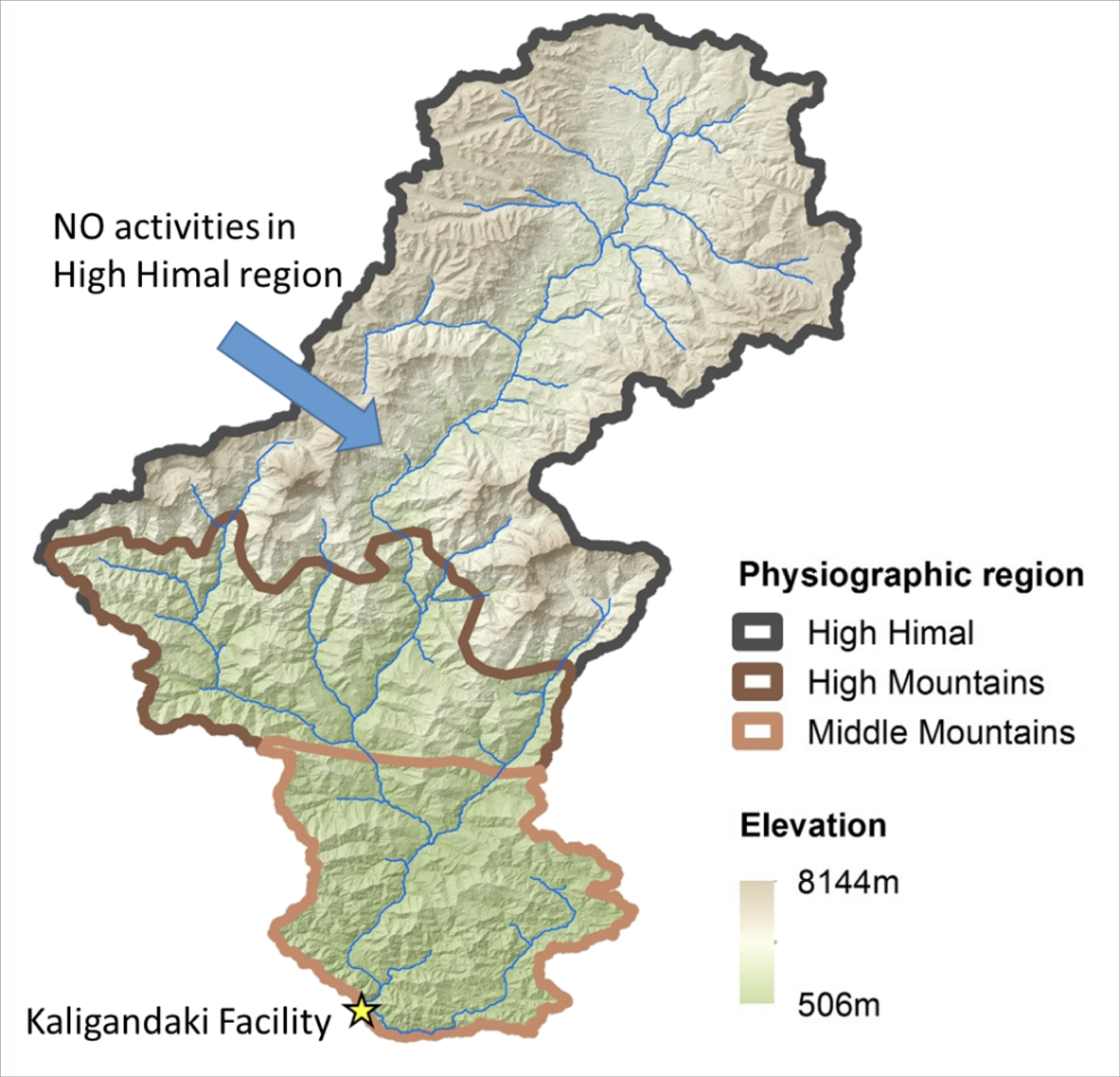
Four catchment management activities (SALT, conservation farming, reforestation, and forest management & conservation) were selected as a representative sample of the types of management actions that could be taken in the basin to improve landscape condition and control sediment. Potential activities to be analysed were chosen for their feasibility and suitability to the local conditions, based on a review of relevant literature (e.g., WOCAT database), and later refined through stakeholder consultation during an interim workshop held in the March 2016 workshop. Based on the input from this workshop, as well as feedback from staff of the Department of Soil Conservation and Watershed Management (DSCWM), criteria for where these activities could be feasibly located and their costs were defined. Costs and feasibility constraints were based on the experience of DSCWM in implementing similar activities in the area (Table 2.5). Stakeholders expressed strong concerns about the challenges of large-scale implementation of catchment management activities in more remote rural areas of the High Himal. As the goal of this study was to improve the targeting of interventions within the bounds of what is currently feasible and funded through the rehabilitation project (rather than developing a master plan for watershed management), the decision was made to only consider activities Furthermore, catchment management activities were only considered in the Middle and High Mountain physiographic regions; no activities were considered in the High Himal region (Figure 2.5). This decision was informed by stakeholder feedback during the interim workshop, where it was indicated that it is not feasible to implement activities in the more remote rural areas of the High Himal.
The selected activities reflect general categories of activities that are applicable to different land areas based on their current land management and physical characteristics. Given the nature of the four activities and the model setup, there was no overlap between the locations where each could be implemented. For example, SALT and conservation farming are both strategies to be implemented on agricultural lands, but SALT is designed for high-sloped areas (>5% slope), while conservation farming is done on lower slopes (<5%). Reforestation was not considered as a feasible action on agricultural lands, as it would take those lands out of production. However in many cases, rehabilitation of agricultural lands through the types of activities recommended would include the planting of some trees and shrubs to improve vegetation cover and provide fuel wood.