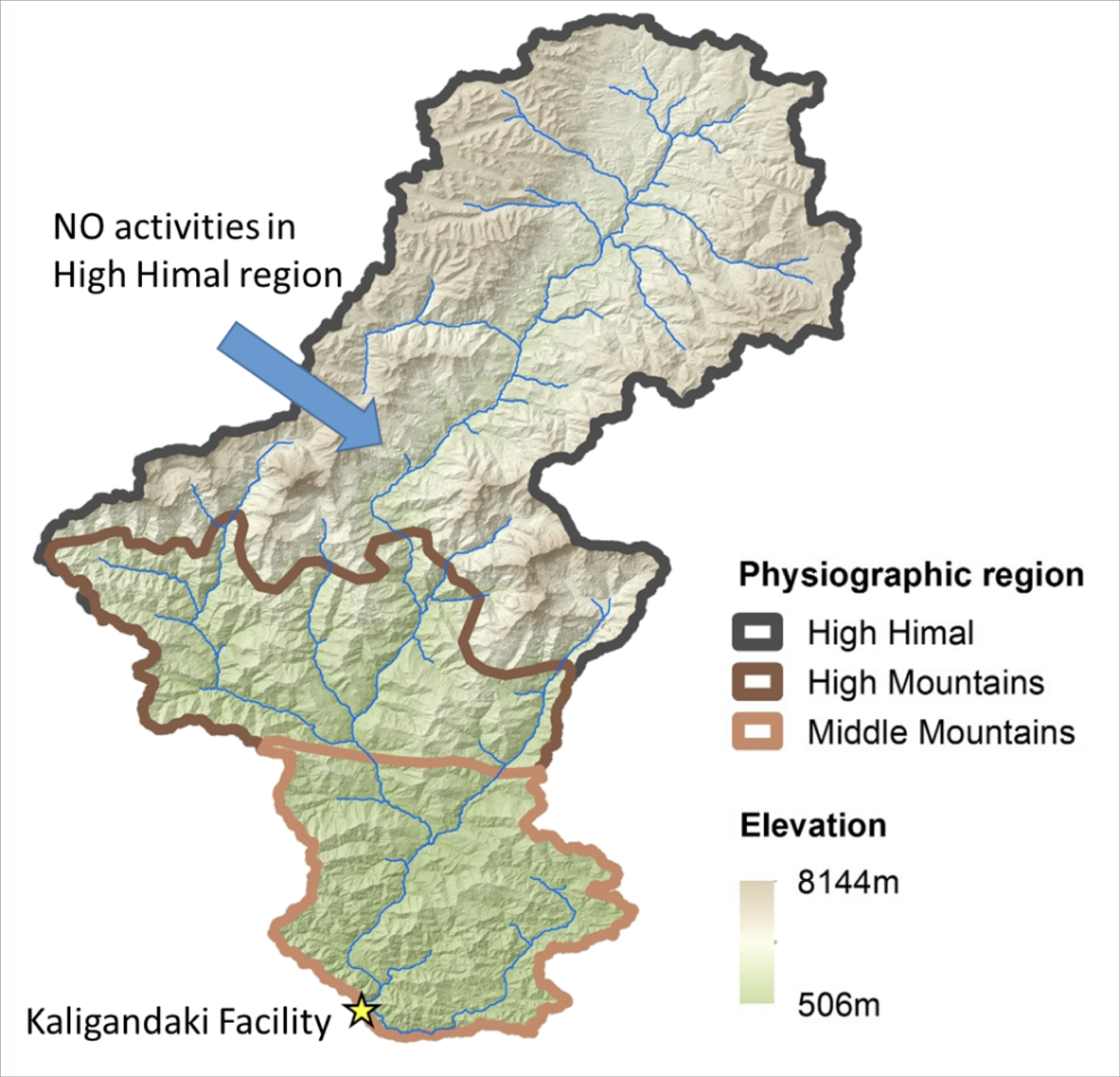
Activities with the potential to mitigate sediment within the Kaligandaki Basin were identified in three categories: non-structural interventions; structural interventions, and road construction mitigation interventions. Due to stakeholder feedback on the difficulty of implementing sediment control activities in the remote High Himal region, the study only considered activities in the Middle and High Mountain physiographic regions; no activities were considered in the High Himal region.
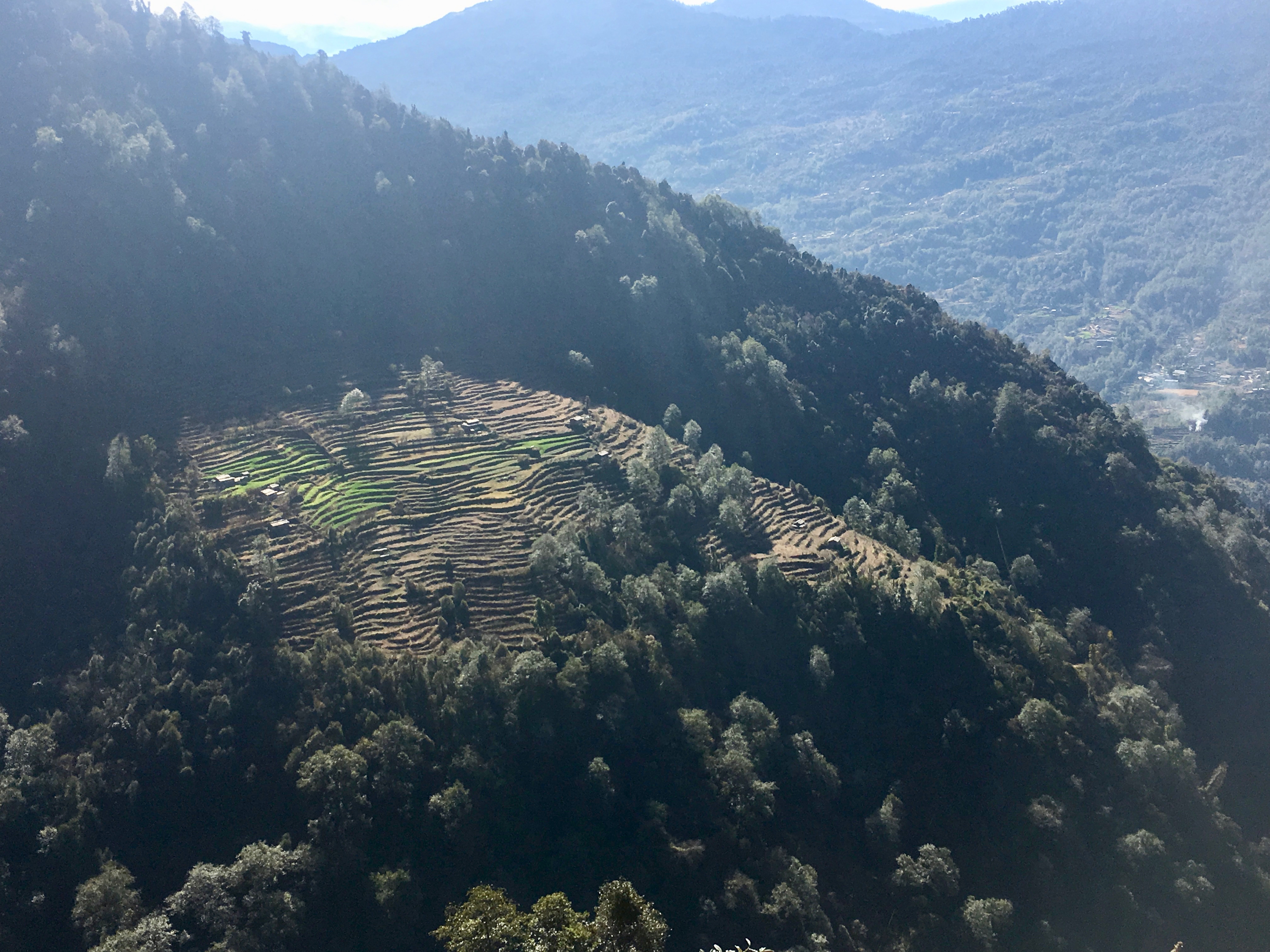
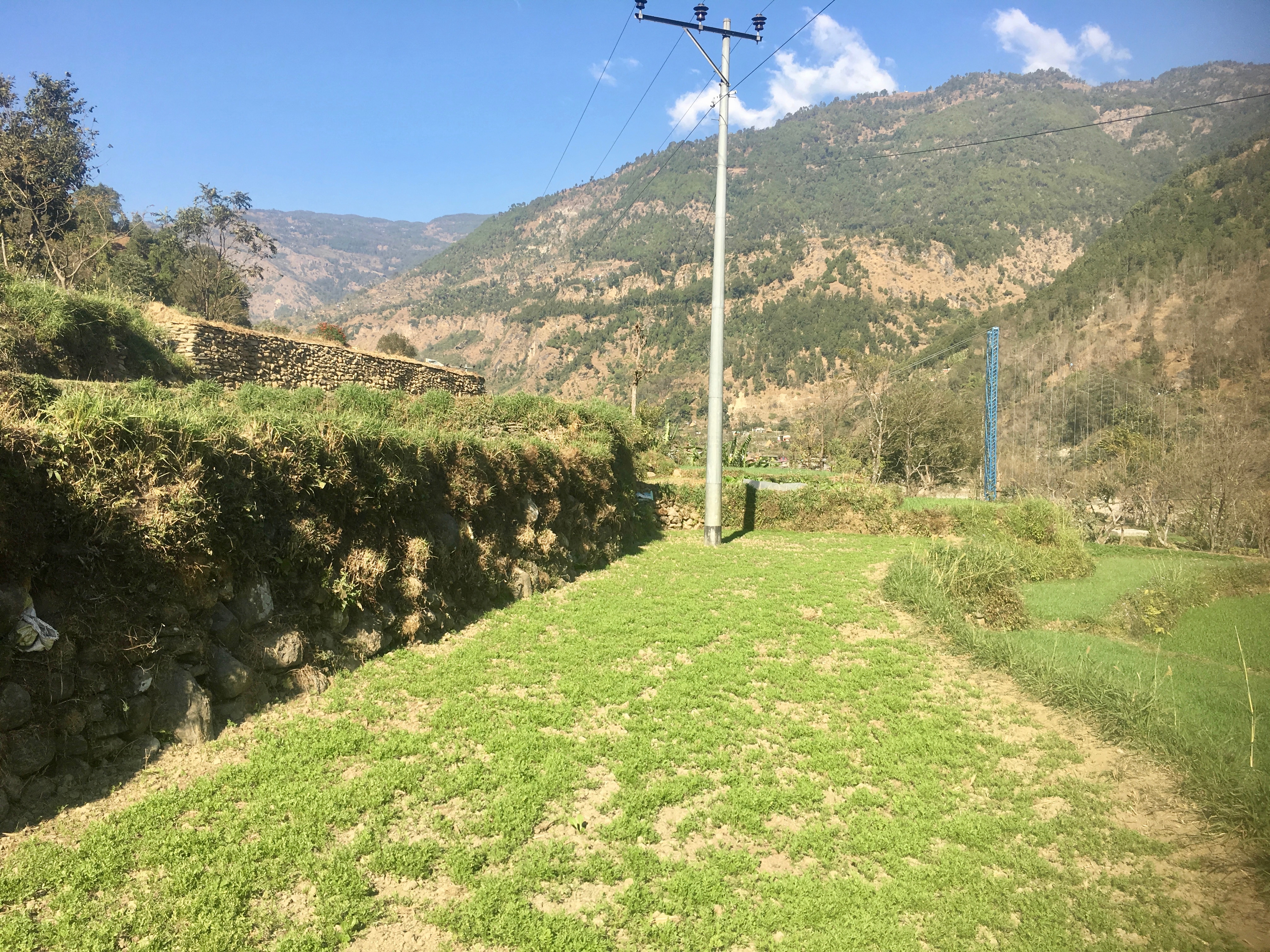
The study defined a set of representative catchment management activities in consultation with stakeholders, including Sloping Agricultural Lands Technologies (SALT), conservation farming, reforesting degraded areas, and forest management/conservation. Implementation of these activities was modeled in the calibrated SWAT model for every feasible location in order to estimate their potential impacts and identify activities and locations where catchment management could have the greatest impact. The tiles below provide additional detail and resources for each of the non-structural interventions included.
The study modeled three different scenarios for non-structural interventions: 1) “baseline”, using the current (2000) land cover inputs; 2) “full implementation”, applying SALT, conservation farming, and reforestation activities in every HRU where they are possible; and 3) “avoided degradation”, using the same setup as full implementation, but with all possible HRUs currently under non-degraded forests converted to degraded forest.
The difference between the baseline sediment load and the load from scenarios of full activity implementation (based on SWAT results) represents the maximum improvement that can be attained through the modeled catchment management activities. Due to landscape factors such as slope, soils, climate variability, and existing land management, these differences can be greater in some areas than in others, even for the same activities. The study used the difference to rank potential activity areas based on per-hectare improvements in sediment load.
The study then assessed impacts of land management activities in the highest ranking areas across three budget scenarios: 1) the NEA’s budget of 0.8M USD, to be spent within the area immediately adjacent to the facility (Harmichaur, Shrikrishna Gandaki, and Nibuwakharka VDCs,; 2) 0.8M USD, to be spent within the overall watershed area; and 3) 10 times the NEA budget (8M USD), to be spent within the overall watershed area. This last scenario represents priority locations where collaborative watershed management could be undertaken in the future, with the goal of reducing overall sediment loads in the basin through broader partnerships and community engagement.
Starting with the top-ranking HRU and going down the list, each HRU was selected, and the associated costs summed, until the target budget was spent. For each budget scenario, the SWAT model was run again to estimate the total change in water yield and sediment resulting from implementation of the budget-constrained scenarios. This was done by altering the input parameters for the priority HRUs, to reflect implementation of the selected activity.
Structural interventions include such engineering methods as check dams, settling basins, and channel engineering, and were considered in those areas where the non-structural interventions were unable to significantly impact sediment loads, perhaps due to insufficient area on which to implement the selected activities, natural topographic or soil characteristics, or high connectivity between sediment-generating areas and streams. In such places, structural interventions may be required to manage sediment.
The study identified key areas for structural interventions based on sub-basin sediment loads, because engineering structures are not tied to a particular land cover type (and thus HRU), but instead are designed for channels or other areas of concentrated flow which are best represented at the sub-basin level.
Priority areas for structural interventions were identified based on the following criteria: 1) the sub-basin is in the top 30% in terms of its annual sediment load in the baseline scenario (highest loads); 2) the sub-basin exhibits a low change per unit cost when non-structural interventions are fully implemented, relative to other sub-basins (not cost-effective); and 3) the sub-basin shows <10% change in sediment load when non-structural interventions are fully implemented, regardless of their per unit cost (not effective). Sub-basins that met criteria 1 and 2 were designated “medium priority” for structural interventions, meaning that sediment may be managed through non-structural land management activities, but that it is probably not cost-effective to do so. Those sub-basins that met criteria 1 and 3 were designated “high priority” for structural interventions, meaning that non-structural land management activities are unlikely to significantly reduce sediment loads at any cost.
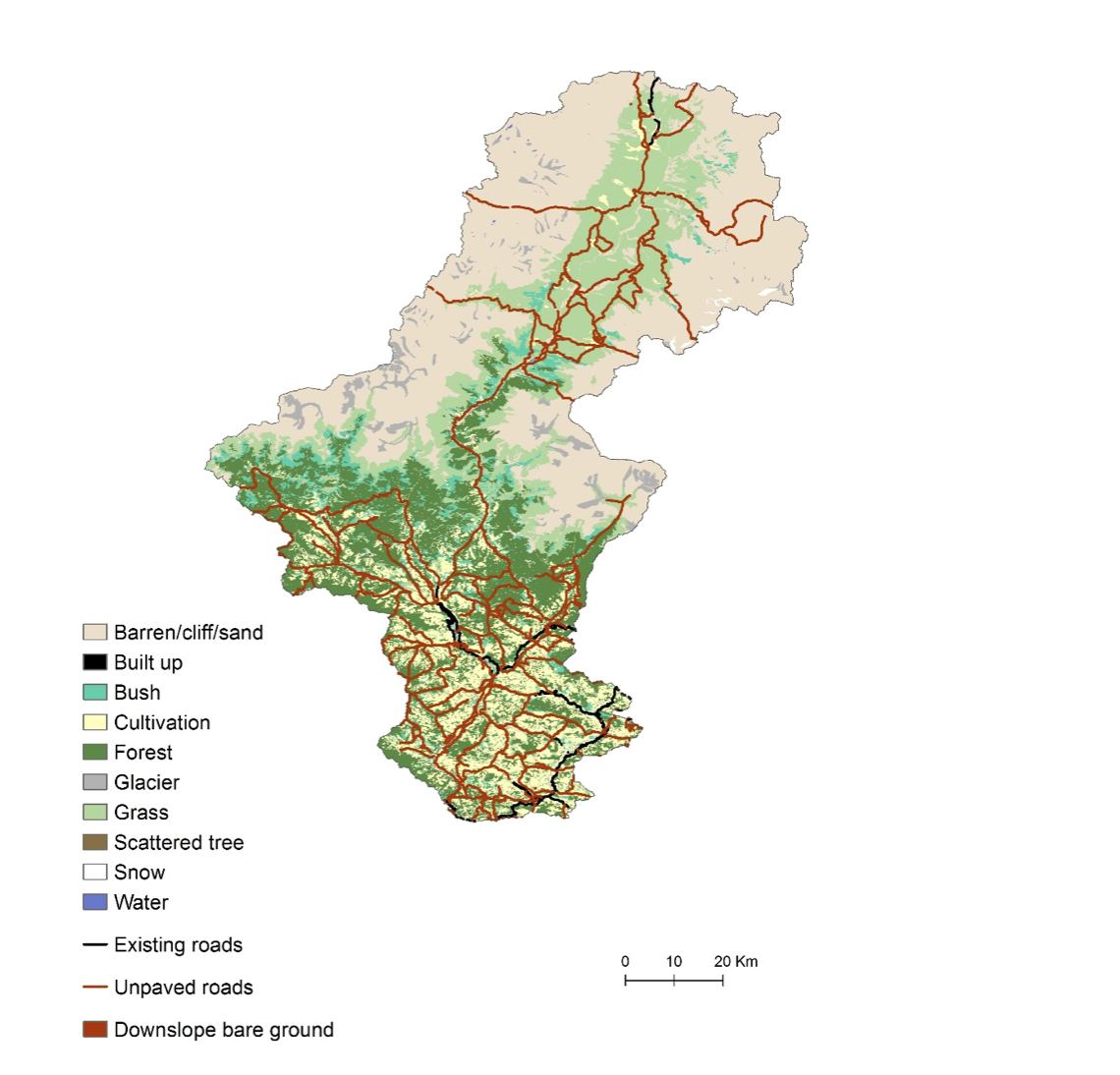
The primary concern with new road construction in the Kaligandaki Basin is the unregulated development of dirt roads in rural areas, which often results in excessive erosion and the loss of vegetation downslope (Pantha et al 2008). Road construction mitigation to reduce sediment was considered in places where new unpaved road construction had the greatest probability of contributing to high sediment loads, in other words where engineering practices are most needed to mitigate potential erosion impacts near construction sites in order to prevent sediment from reaching nearby streams. The SDR model was chosen for this analysis because, unlike SWAT, it allows for a pixel-level analysis of road construction (as opposed to the HRUs required by SWAT), and therefore allowed the study to capture the effects of associated vegetation loss that can happen directly downslope from poorly constructed roads.
Three scenarios were developed using the SDR model to assess the potential impacts of rural road construction: a baseline scenario, an unmitigated scenario, and a mitigated scenario. Each scenario resulted in a measure of sediment export, defined as the amount of erosion (tons/year) that is not retained by vegetation on the landscape but instead enters the nearest stream. The different in sediment export between the unmitigated and mitigated scenarios represents the value of proper road engineering and construction for managing sediment loads. The study identified priority areas for mitigation practices where this difference between the unmitigated and mitigated scenarios was greatest; results are available to view using the interactive results tool.
To model sediment mitigation for roads three scenarios were considered: a baseline scenario of existing roads, and mitigated and unmitigated scenarios, where unpaved roads were assumed to be converted to paved roads with or without proper sediment mitigation techniques.