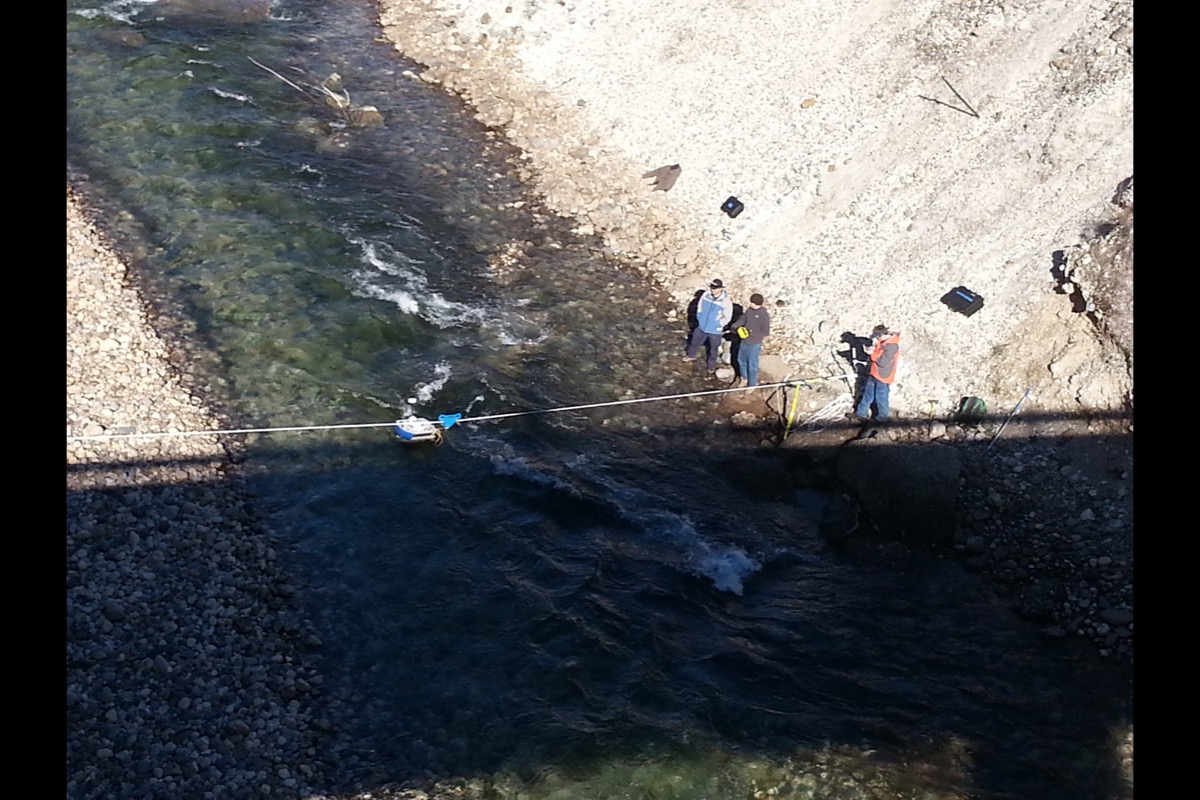
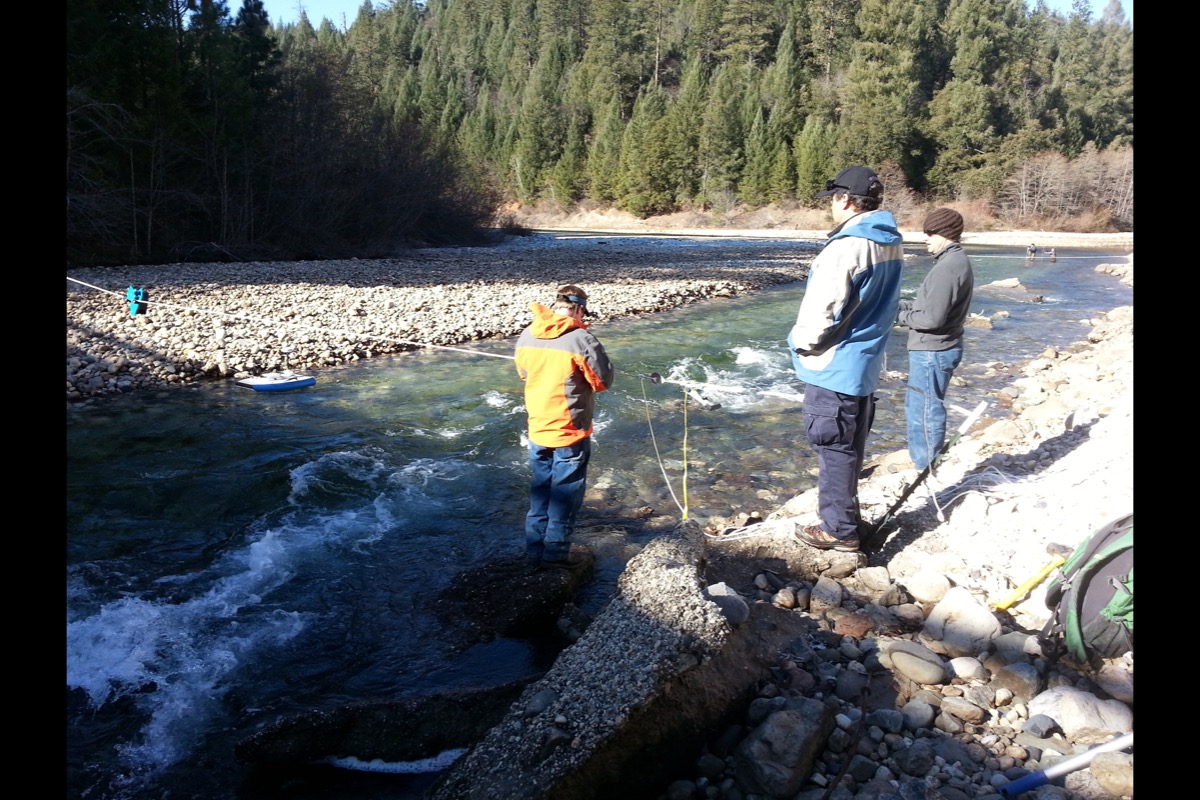
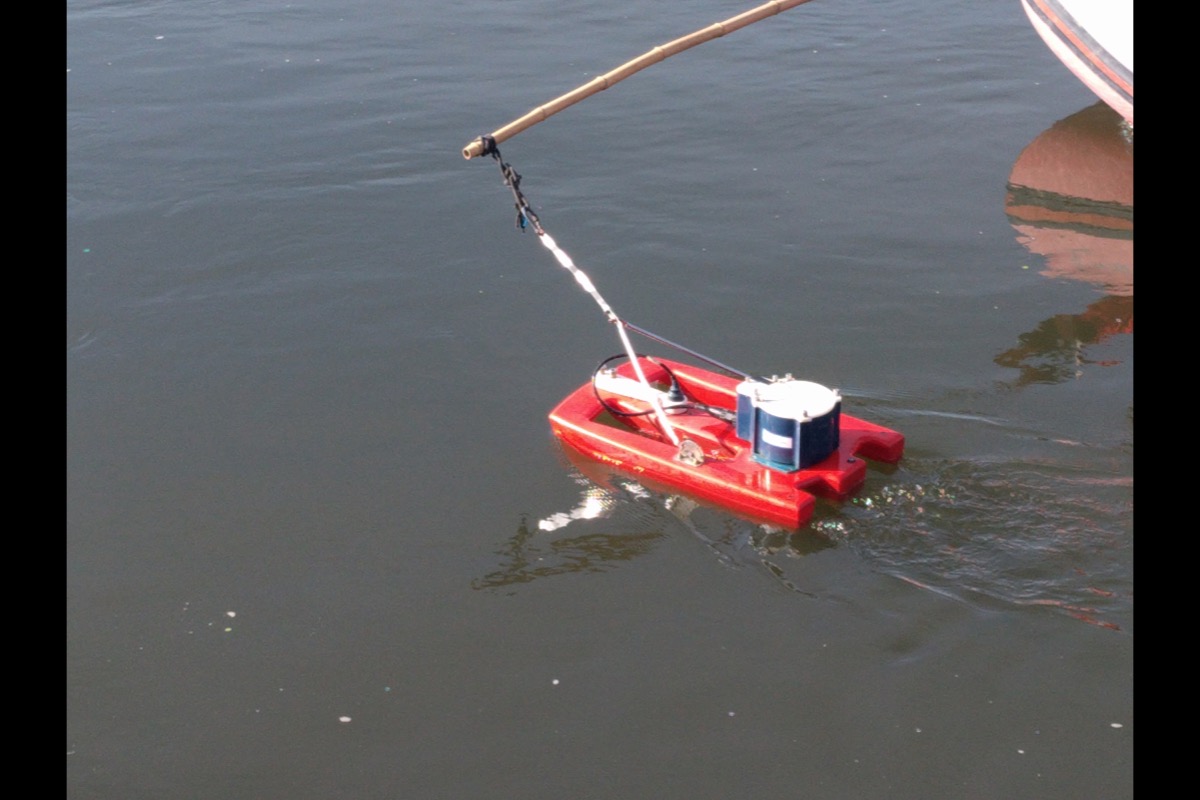
Description: The Acoustic Doppler Current Profiler, known as the ADCP is a discharge measurement device, which avoids moving parts such as that found in mechnical meters. The ADCP relies on SONAR which employs sound waves to determine the distance to targets. The Doppler Effect is used to resolve the speed of targets. The down looking ADCP is different than an up looking and side looking ADCP being that it is not an in-situ sensor and is used for channel profiling and measuring the velocity of a cross section.
The down looking ADCP is a portable device used as a stream gauging device, and considered a more reliable
option to the mechnical current meters. The down looking ADCP is mounted to a small floating device or boat and
pulled across the cross section of the gauging location. The ADCP captures the profile and velocity of the water
source to calculate the discharge. The challenge of the profiling ADCP is river hydraulics that cause waves that
pose a threat to making useful discharge measurements. These river hydraulic features are a common challenge in
mountainous regions. Additionally, ADCP's have a limit on the velocity of water that can be detected. Please
refer to the manufacturers specifications prior to procuring the device. The ADCP is effective in tidal areas or
ocean to measure current, where current changes even though the water level may remain the same. The down
looking ADCP is optimally suited for canals, estuaries, river deltas, and river reaches that experience
backwater. ADCP's are expensive piece of equipment and careful precaution must be made when using it with a
float device or boat.
Costs USD Lower: $15,000
Costs USD Upper: $55,000
Accessories: cable way, boat
Advantages: Can measure the channel profile along with water velocity. Allows users to measure greater water depths than wading rods ability.
Disadvantages: Is relatively expensive compared to other stream gauging sensors. Not suitable for continuous measurement, as measurements are manually taken.
Pictures: